
What To Do in the First 24 Hours After Fraud
A clear, step-by-step response plan for the first 24 hours after fraud: stop contact, protect accounts, secure logins, freeze credit if needed, document, and report through official channels.
FRAUD PREVENTIONFFDI
Friendly Tech Guide
2/28/20263 min read
Discovering that you may have been a victim of fraud can feel overwhelming.
The first reaction is often panic. That reaction is understandable, but early action matters.
Federal guidance emphasizes acting quickly to limit losses, secure accounts, and support potential recovery steps. The first 24 hours are about containment. (See Sources at the end.)
Here is a clear, structured approach.
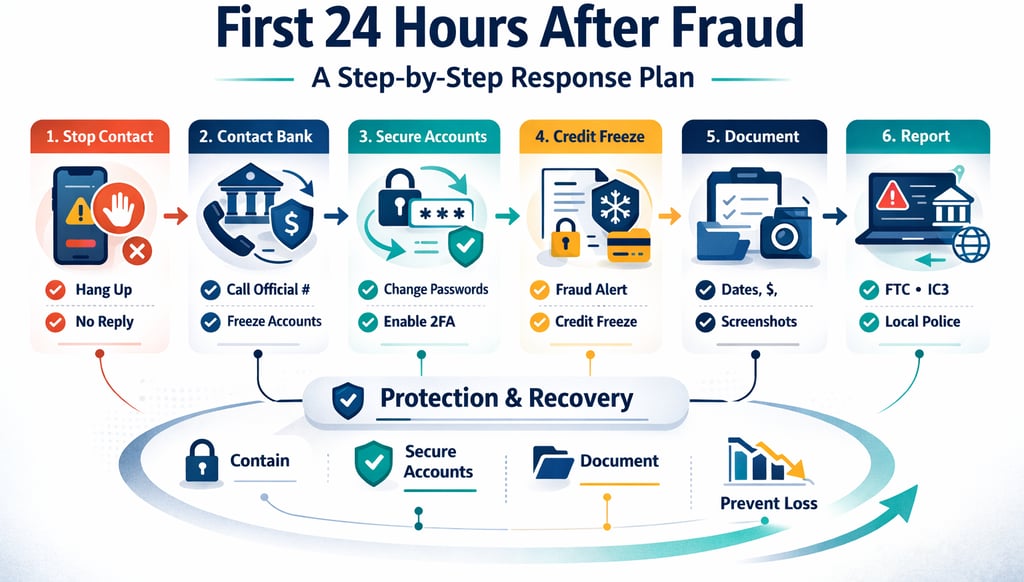
STEP 1: STOP ALL CONTACT IMMEDIATELY
If the fraud involved a phone call, text, email, or online message:
• End communication
• Do not attempt to argue
• Do not try to “recover” money through the same channel
Fraudsters often continue engagement to extract additional funds. Ending contact helps prevent further loss.
STEP 2: CONTACT YOUR FINANCIAL INSTITUTION
If money was transferred or account access was involved:
• Call your bank or credit card company directly
• Use the official phone number on the back of your card, your statement, or the institution’s official website/app
• Explain that you believe fraud has occurred
• Ask what immediate protections are available (freeze, block, dispute, reversal/recall, new card/account number)
If you sent money through a specific method, ask about the recovery path immediately (credit/debit dispute, unauthorized transfer reversal, wire recall, payment-app dispute, etc.). Time matters.
STEP 3: SECURE YOUR ACCOUNTS (PASSWORDS + EMAIL)
If any login credentials were shared or if you suspect they were:
• Change the password for the affected account
• Change the password for your email account(s)
• Turn on two-factor authentication (2FA) wherever available
• If you reused the same password anywhere else, change it there too
Email is especially important. If a scammer gets into your email, they can attempt password resets on other accounts.
STEP 4: PLACE A FRAUD ALERT OR CREDIT FREEZE (IF IDENTITY INFO WAS EXPOSED)
If your Social Security number or identifying information may have been exposed, consider:
• Placing a fraud alert with a major credit bureau
• Initiating a credit freeze to block new credit from being opened in your name
A fraud alert tells lenders to take steps to verify identity before opening new accounts. A credit freeze restricts access to your credit file until you lift it.
STEP 5: DOCUMENT EVERYTHING
Write down (or screenshot):
• Dates and times
• Phone numbers, email addresses, usernames, and websites used
• Amounts transferred (and how)
• Names, titles, or departments claimed
• Any receipts, confirmation numbers, or transaction IDs
• Screenshots of texts, emails, chat messages, and payment screens
Documentation supports investigations and can help financial institutions review your case.
STEP 6: FILE OFFICIAL REPORTS
Consider reporting through:
• IdentityTheft.gov (recovery steps and reporting)
• ReportFraud.ftc.gov (FTC reporting)
• IC3.gov (FBI Internet Crime Complaint Center)
• Local law enforcement (especially if there is an immediate risk or a large loss)
Reporting may also help detect patterns and prevent others from being harmed.
STEP 7: SLOW DOWN AND ASSESS
Fraud often triggers shame or embarrassment. That reaction is common.
Fraud schemes are designed to bypass logic and exploit urgency. Many responsible, intelligent people are affected each year.
The focus now is simple:
• Containment
• Account protection
• Documentation
• Prevention of additional loss
WHY EARLY ACTION MATTERS
Rapid action can:
• Increase the chance of stopping or reversing transactions (when possible)
• Prevent additional unauthorized activity
• Reduce the risk of new accounts being opened in your name
• Support recovery and investigative efforts
The first 24 hours are not about perfection. They are about protection.
FLORIDA FRAUD DEFENSE INITIATIVE
The Florida Fraud Defense Initiative operates as a community education program under Friendly Tech Guide. Its mission is to provide structured, practical guidance that Florida communities can use immediately when fraud occurs.
Prevention is ideal.
A prepared response is essential.
Community organizations interested in hosting a structured fraud response session may contact Friendly Tech Guide for additional information.
SOURCES:
FTC — What To Do if You Were Scammed
FTC — Credit Freezes and Fraud Alerts
CFPB — What do I do if I’ve been a victim of identity theft?
FBI — Cyber (IC3 reporting; rapid reporting can support recovery of lost funds)
FBI IC3 — Internet Crime Complaint Center
IdentityTheft.gov — Report identity theft and get recovery steps
DISCLAIMER: This is general guidance, not legal advice. If you believe money or accounts are at immediate risk, end the contact and use official channels you can navigate yourself (for example, your bank’s official support number on your card or statement).
If you found this information helpful, please forward it to someone who could benefit.
Personalized technical assistance at your convenience.
© 2025. All rights reserved.