
The Home Theft Scam Hiding in Public Records
Property and deed fraud can bypass physical security, beginning instead with a forged document filed in public records. This guide explains how Florida homeowners can use free county alert systems and simple record checks to notice suspicious activity before it becomes a bigger problem.
Friendly Tech Guide
5/29/20267 min read
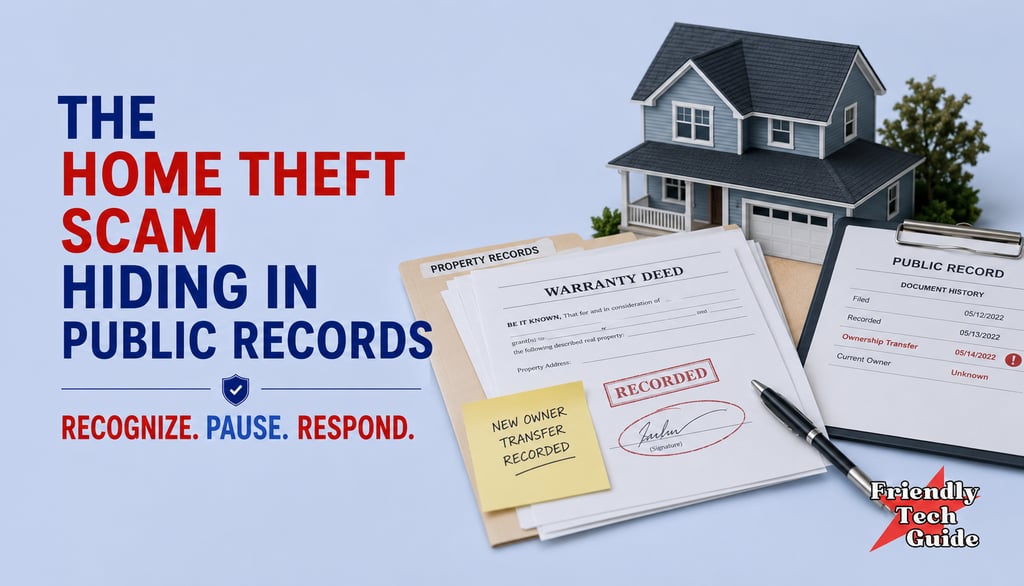
When most people picture home theft, they picture a broken window or a forced door. Property fraud can be much quieter than that. It can start with a single document recorded in public records, and the person who owns the home may not find out until the paperwork has already been moved.
This kind of fraud does not need a key or a crowbar. It needs a forged signature, a copied name, and access to a county recording system that is, by design, open to the public. The good news is that the same public-records system that makes this possible also gives you a way to watch it. Florida law now requires every county Clerk to offer a free service that tells you when a document is recorded against your name or property. It will not stop a bad document from being filed, but it can help you find out fast.
This article explains what property and deed fraud actually is, why Florida homeowners should pay attention, what a property fraud alert can and cannot do, and the practical steps you can take this week.
What Property and Deed Fraud Means
A few plain definitions make the rest of this easier to follow.
A deed is the document that shows who owns a piece of real estate. A mortgage is a document that pledges your property as security for a loan. A lien is a claim filed against your property, often to collect a debt. Together with similar paperwork, these are sometimes called land records, which Florida law defines as deeds, mortgages, or other documents that claim to transfer or impose a burden on real property.
Public records are exactly that: public. When a deed, mortgage, or lien is recorded with the county Clerk, it becomes part of the official record that anyone can search. That openness is useful and normal. It is how title companies, lenders, and buyers confirm who owns what.
Property fraud happens when someone files a false or forged document into that system. A scammer might record a fake deed that makes it appear as though a home changed hands, or file paperwork to borrow against a property they do not own. Because recording a document and proving its truth are two different things, a fraudulent filing can sit in the record for a while before anyone notices. The real owner often has no reason to check, especially if nothing about daily life seems to change.
Why This Matters in Florida
Florida has built a specific tool into state law for this exact problem.
Under Florida Statute 28.47, every Clerk of the Circuit Court must create, maintain, and operate a free recording notification service that is open to anyone who wants to register. The law took effect for clerks on July 1, 2024. You can sign up to monitor a personal name, a business name, or a parcel identification number, and the law lets you register at least five of these monitored identities per email address.
When a land record tied to something you are monitoring gets recorded, the Clerk must send you an email notification within 24 hours. That notice includes the recording date, the official book and page number or instrument number, and instructions for searching and viewing the document yourself. The information you submit to register, including your email, phone number, names, and parcel numbers, is treated as confidential under the statute and is exempt from public disclosure except by court order.
In plain terms, Florida decided that homeowners should not have to babysit the public record by hand. The state made counties build a free alarm for it.
What a Property Fraud Alert Does
It helps to be clear about what this service is, because the name can promise more than it delivers.
A property fraud alert monitors documents recorded in the county's Official Records and notifies you when one matches the name or parcel you registered. In Hillsborough County, for example, the Clerk's free Property Fraud Alert sends an email or phone notification whenever a document is recorded using your name or your business's name, and the alert gives you an instrument number you can use to look up the actual document.
Here is the important part. The alert does not block a document from being recorded. It does not decide whether a filing is fraudulent. It does not undo anything. What it does is tell you that something happened, so you can look. As the Hillsborough Clerk puts it, reviewing your property records is an important way to protect yourself, and an alert about activity you did not start can give you valuable time to respond.
Think of it less like a lock and more like a smoke detector for your public records. It does not prevent the fire. It tells you to check the kitchen.
Why Exact Names and Records Matter
Because these systems work by matching what gets recorded against what you registered, the details you enter make a real difference.
If you only register one spelling of your name, a document filed under a slightly different version may not trigger an alert. So it is worth registering the variations that actually appear in your record: your full legal name, any name you commonly use, a maiden or former name still attached to a property, and the way your name appears on the deed itself. If you own property through a business or a trust, register those names too. If the system lets you monitor a parcel identification number, use the full and exact parcel number for your property.
Co-owners are worth a moment of thought. A spouse, a sibling, or an adult child on the deed should generally register on their own, under their own name, so that activity tied to either owner is covered. The goal is simple: make sure the way a fraudulent document would most likely be filed is something your alert is actually watching for.
Warning Signs Homeowners Should Not Ignore
Most property fraud leaves a paper trail, and some of the early signs show up in ordinary mail and routine notices. Treat the following as reasons to look closer, not as proof of a crime:
A recorded document you do not recognize and did not sign.
A change in ownership of your property that you never authorized.
A document that appears to be signed by someone who has died.
A loan, mortgage, or lien against your property that you never took out.
Mail suggesting your identity was used to transfer or borrow against property.
A recorded document that looks altered or inconsistent with your records.
Your routine tax bills or property notices suddenly stop arriving.
A notice of default, foreclosure, or a trustee sale that makes no sense to you.
Unexpected loan paperwork or real estate documents in your mail.
Any one of these is worth a careful check of your county's Official Records. Several of them together are worth prompt attention.
Who Should Be Especially Careful
Property fraud can target anyone who owns real estate, so this is not only an issue for older adults. That said, certain situations make a property an easier target simply because no one is watching it closely.
Owners who hold property free and clear, with no active mortgage company tracking the file, have fewer outside eyes on their records. The same is true for vacant lots and undeveloped land, which can sit untouched for years. Seasonal residents and anyone away from a property for long stretches may not see suspicious mail in time. Inherited property can be vulnerable during the gap when an estate is settling. Rental property owners juggling several parcels may not quickly notice a problem on one of them. And adult children helping aging parents are often the ones who first spot a strange notice, so they are worth bringing into the loop early.
If any of these describe you or someone you help, setting up the free alert is easy.
What To Do This Week
You do not need to do everything at once. A short, practical pass is enough to get meaningfully ahead of this risk:
Search your county's Official Records online for your name and your property, and confirm the records look correct.
Confirm that your county Property Appraiser and Tax Collector have your current mailing address, so notices reach you.
Sign up for your county Clerk's free recording or property fraud alert service.
Register the variations that matter: your legal name, common name, any former name on a record, business names, trusts, and your exact parcel number.
Save your county Clerk or Recording Department contact information somewhere easy to find.
If you travel or own a property you do not visit often, ask a trusted person to watch the mail and the property.
When an alert arrives, open it and review it promptly rather than setting it aside.
None of these steps cost money, and most take only a few minutes.
If an Alert Appears
Getting an alert does not automatically mean you have been defrauded. Many recorded documents are legitimate. The point is to check calmly and quickly:
Do not ignore it.
Use the instrument or book and page number in the alert to open the actual document through your county Clerk's official Official Records site.
Compare the details: the document type, the names, the parcel or address, the recording date, and the instrument number. Decide whether you recognize the filing.
If anything looks wrong, contact your county Clerk or Recording Department for help researching the document.
Contact law enforcement if you believe you are the victim of fraud.
Contact your county Property Appraiser and Tax Collector, where it is relevant to your situation.
If you have title insurance, notify your title insurer.
Consider speaking with a qualified real estate attorney about your options.
Keep copies of everything: the alert email, the document, screenshots, envelopes, and any notices, along with the dates.
Acting early gives you and the professionals you involve more room to sort out the problem.
The Bottom Line
Property and deed fraud is unsettling precisely because it can happen on paper, out of sight, while everything at the house looks normal. But the same public-records system that makes a forged filing possible is also where you can catch it, and Florida has made the alerting part free.
A property fraud alert is not a lock on your front door. It is more like a smoke alarm for public records. It cannot guarantee that nothing will happen, but it can help you notice a problem sooner, and noticing sooner often gives you time to respond.
If you know anyone who could benefit from this information, please forward this to them. Thank you.
Read Next:
Sources:
Florida Statute 28.47, Recording notification service; related services; public records exemption
Palm Beach County Clerk of the Circuit Court & Comptroller, Property Fraud Alert
Hillsborough County Clerk of Court & Comptroller, Property Fraud Alert
Friendly Tech Guide Disclaimer
Friendly Tech Guide provides general technology education and practical safety guidance. This article is not legal, financial, or real estate advice. If you believe a fraudulent document has been recorded against your property or identity, contact your county Clerk or Recording Department, law enforcement, and a qualified professional through a verified channel.
Personalized technical assistance at your convenience.
© 2025. All rights reserved.