
If a Delivery Text Tells You to Click, Pause
Scammers use fake package delivery texts to steal personal and payment information. Learn how to recognize suspicious delivery alerts, pause before clicking, and verify packages through official carrier or retailer channels.
FLORIDA FRAUD DEFENSE INITIATIVEFFDIPHONE SCAMSSCAM LINKSFRAUD PREVENTIONSCAM AWARENESSCALLER ID SPOOFING
Friendly Tech Guide
4/28/20264 min read
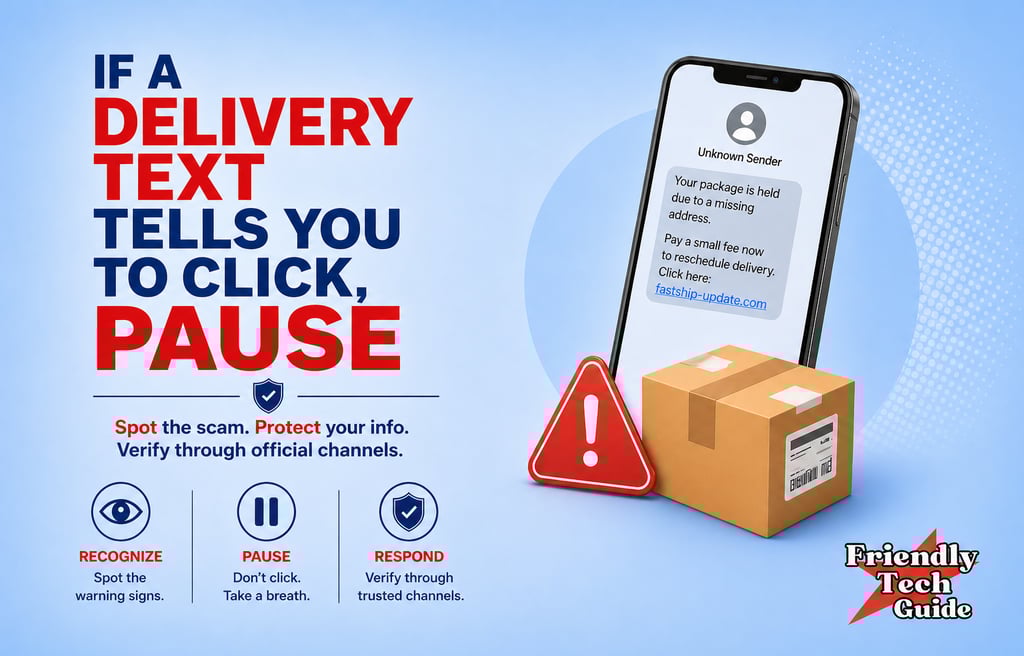
That missed delivery text is not from the post office. It is an invitation to a scam.
If you shop online, you have almost certainly seen one. A text arrives saying your package is being held due to a missing house number, a small unpaid postage fee, or a delivery issue at the warehouse. There is a link. There is a deadline. And the sender wants you to act fast. Pause. This is one of the most common scams in the country right now, and the quickest way to get burned is to click before you think.
Why Delivery Text Scams Work
These scams succeed because they ride on a real expectation. You probably are waiting on something. A phone, a prescription, a birthday gift, a tool for the garage. Scammers count on that. They send millions of messages, and a small percentage of recipients click. According to the USPIS package tracking text scam guidance, unexpected package texts that include unfamiliar links are a clear warning sign of smishing, the text-message version of phishing. It is volume, not skill, that makes this scheme profitable for the criminals running it.
The Most Common Messages People See
The wording shifts, but the bones of the message stay the same. Some claim that your package cannot be delivered because the address is incomplete. Some say a small redelivery fee is owed. Some impersonate USPS, FedEx, UPS, DHL, or Amazon and warn that delivery has failed. The FTC consumer alert on fake USPS delivery texts explains that these messages often direct you to a lookalike website built only to collect personal information or payment details.
Why the Small Fee Is Not the Real Target
It is tempting to assume the danger is only a few dollars. It is not. The card data you enter on a fake site is the prize. Once your card is used to pay a tiny fee, the same number can be tested on larger purchases or sold to other scammers. The same form may also collect your address, date of birth, phone number, and account login. That information feeds identity theft. The USPS scams and scheme alerts page makes the rule simple: USPS does not send unsolicited texts asking for personal information or payment to release a package.
Missing Address and Failed Delivery Red Flags
A real carrier handles missing-address problems through internal systems and the original sender. They do not text you a link to type your address into a website. The FedEx fraud prevention guidance states that FedEx does not request personal account or identity information through unsolicited mail, email, or text. The UPS fraud prevention guidance similarly warns that fraudulent communications may ask for personal information or advance payment and may include unsafe links. If you see either pattern in a text claiming to be from a carrier, treat it as a scam by default.
Brushing and QR Code Caution
Two newer twists deserve a name. A brushing scam delivers an unordered package and uses your address to post fake reviews on a seller's behalf. A QR code in a text, on a flyer, or on a stray delivery sticker can route you to the same fake collection page that a link would. The DHL fraud awareness page lists fake DHL websites, suspicious SMS messages, and email scams as ongoing threats and recommends using only official DHL channels to verify any shipment.
Recognize the Signal
Before you click anything, look at three things. Did you actually order something this week? Does the sender number or email appear to be from a real carrier? Does the link match a website you recognize without strange extra words or hyphens? The Better Business Bureau alert on fake package delivery scams recommends that any unexpected delivery message be treated as suspicious until it is verified directly by the seller or carrier.
Pause and Verify Through a Trusted Path
This is the part most people skip. Do not tap the link. Open a separate browser tab or your carrier's official app. Type the carrier name yourself, or open the order page on the original retailer's site. If the order is real, the tracking page will show it. If the order is not real, there is nothing to track. A two-minute pause protects more than any antivirus tool.
Respond Safely
Delete the message and report it. You can forward suspicious texts to 7726, which spells SPAM, so your carrier can flag the sender. You can also report the message directly through the FTC fake USPS delivery text warning page, and to USPIS if a USPS impersonation is involved. Block the number after you report it.
What to Do if You Already Clicked or Paid
If you entered card details, call the bank number on the back of your card and ask for a fraud hold. Change the password for any account where you reused that login. Check your credit report and place a fraud alert. If you paid through a third-party app, contact that app's fraud team the same day. The sooner you act, the more of the loss you can potentially recover.
A real package will wait. A scam wants you to rush.
If you found this information helpful, please forward it to someone who could benefit.
Read Next
Disclaimer:
This article is for general education only and is not legal, financial, or cybersecurity advice. If you believe you have been the victim of fraud, contact your bank, the carrier directly, and the appropriate consumer protection authority.
Sources:
Personalized technical assistance at your convenience.
© 2025. All rights reserved.