
The Pause Method: Stop a Scam in Ten Seconds
A simple ten-second pause can break a scammer’s pressure and protect your money. Use this quick script to safely verify before you click, pay, or share codes.
FLORIDA FRAUD DEFENSE INITIATIVEFFDIFRAUD PREVENTIONPHONE SCAMSSCAM PREVENTIONTASK SCAMSONLINE SAFETYPOPUP SCAMSDMV SCAMSGIFT CARD SCAMSSCAM AWARENESSPHISHING
Friendly Tech Guide
3/11/20263 min read
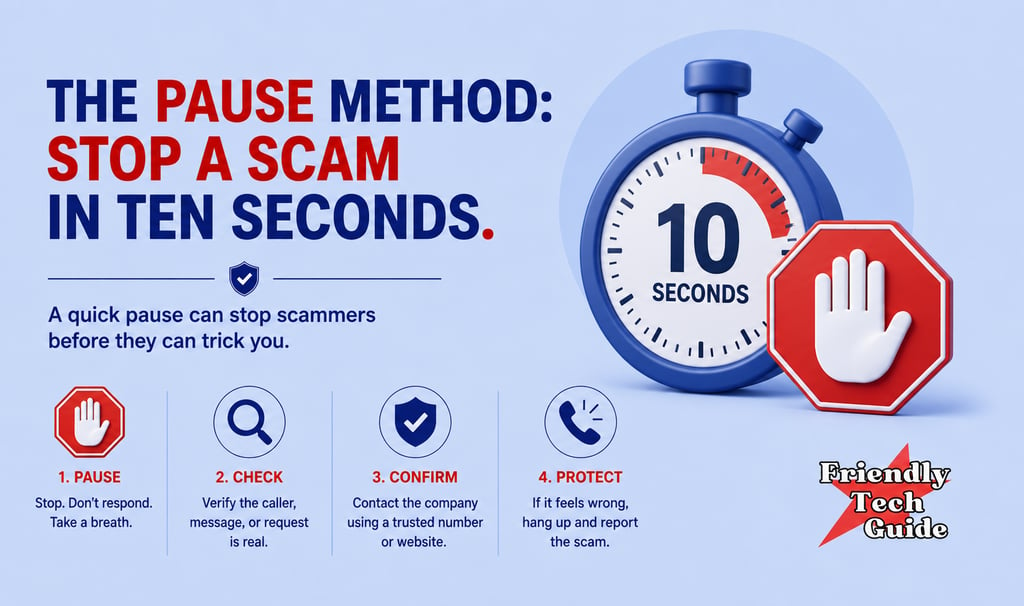
Scammers do not win because they are smarter. They win because they get you to move fast. Ever notice how the message always feels urgent, secret, or scary?
The Pause Method is how you take your brain back. It is simple. It is quick. And it works because pressure only works when you keep moving.
What is the Pause Method
The Pause Method is one move you do before any action that can cost you money, your account, or your identity.
Pause for ten seconds.
Breathe once.
Then verify before you do anything else.
That is it.
Why a pause works
Scams run on speed.
Pressure creates tunnel vision.
A short pause breaks the spell and gives you time to think.
If you do nothing else, do this
If someone asks you to pay, share a code, move money, or keep it secret, pause.
Then ask yourself one question
Why do they need me to act right now?
The ten-second script
Say this out loud. Yes, out loud. It slows you down.
I am going to pause for ten seconds.
I am not paying or sharing anything right now.
I will call the official number and verify.
If the person gets angry, rushes you, or threatens you, that is not proof. That is pressure.
How to verify safely
Do not verify using the phone number, link, or email they gave you.
Use a trusted source instead
Bank or credit card
Use the number on the back of your card or in the official app.
Government agency
Go to the official website by typing it yourself, then call the number listed there.
A friend or family member
Call them back using the number you already have saved.
A delivery company or retailer
Open the official app, not a link in a text.
What you should never do under pressure
Never buy gift cards for someone else.
Never send crypto because someone told you it is the only way.
Never move money to keep it safe.
Never share a one-time code.
Never install remote access apps because someone told you to.
Never click a link just to fix a problem fast.
If they insist, you already have your answer
A real company can wait while you verify.
A scammer cannot.
Common pressure lines scammers use
Your account will be closed today.
A warrant is being issued.
Your package is held.
Your computer has a virus.
Your card was used in another state.
You won a prize, but you must pay a fee.
This is confidential. Do not tell anyone.
Do you see the pattern? Pressure plus payment.
If you have already paid or shared something
Do this in order
1 Call your bank or card company right now and ask to stop or reverse the transaction.
2 Change your password for the account involved.
3 Turn on two-factor authentication.
4 If you shared a code, tell the company immediately.
5 Report the scam so there is a record.
Helpful link:
Report fraud to the FTC
If you want the bigger framework
The Pause Method fits inside the RPR Method.
Recognize the scam signal.
Pause to break the pressure.
Respond with verification, not panic.
You do not need to outsmart scammers. You only need to slow them down.
Read next:
The RPR Method: Recognize, Pause, Respond
How to Recognize a Phone Scam in 10 Seconds
If you found this information helpful, please forward it to someone who could benefit.
If you want calm help setting up safer accounts or checking a suspicious message, reach out at https://friendlytechguide.com.
Disclaimer: Friendly Tech Guide provides general education and support. We are not a law firm, bank, or government agency. For legal or financial advice, contact a qualified professional. If you believe you are in immediate danger, call local law enforcement.
Sources
Federal Trade Commission Report Fraud
Federal Trade Commission Scams and fraud
FBI Internet Crime Complaint Center
AARP Fraud Watch Network
Personalized technical assistance at your convenience.
© 2025. All rights reserved.