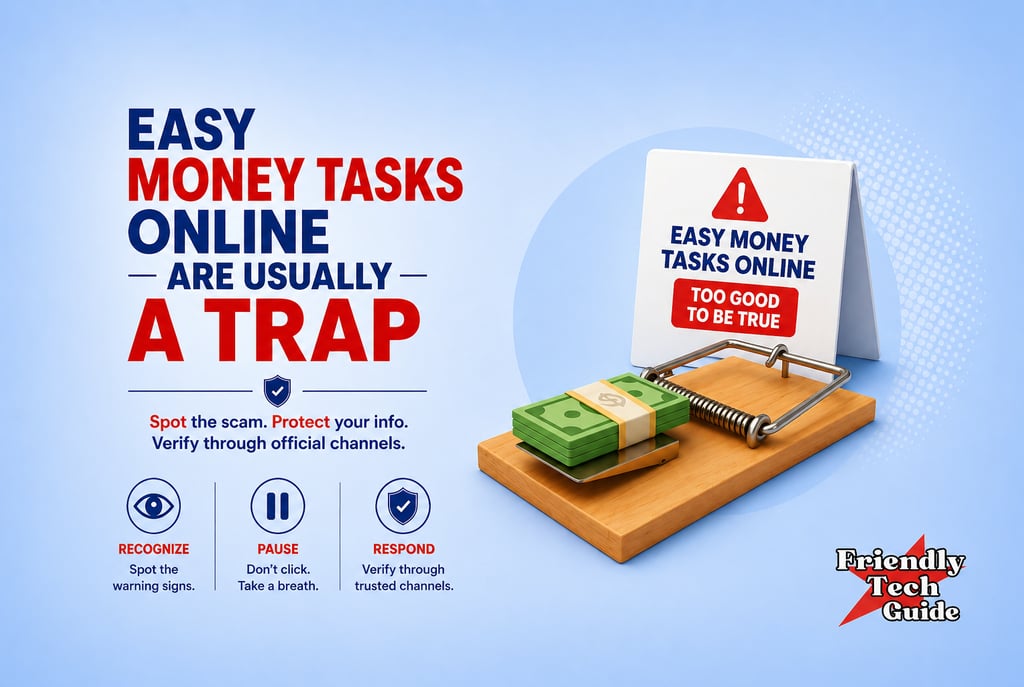
Easy Money Tasks Online Are Usually a Trap
Beware of task scams that lure you with promises of easy money for simple online work. Their true aim is to get you to pay upfront, often using fake recruiters, counterfeit dashboards, deposits, and withdrawal fees, turning a legitimate remote side hustle into a costly trap. Stay informed and protect yourself from these deception tactics.
FLORIDA FRAUD DEFENSE INITIATIVEFFDITASK SCAMSPHONE SCAMSSCAM AWARENESSFRAUD PREVENTION
Friendly Tech Guide
4/28/20264 min read
A job that pays you hundreds of dollars to just click buttons is a job that does not exist.
If you are looking for remote work, side income, or a flexible job that fits around school or family, you have probably seen the offer. A friendly recruiter texts you about a simple online job. The pay sounds good. The work sounds easy. You like videos, rate products, or optimize apps from your phone. There are no interviews. There is no resume. The job starts immediately. Pause. This is one of the fastest-growing scams in the country, and the people running it are very good at making the trap feel real.
Why Task Scams Feel Believable
Real remote work exists, and that is part of what makes this scam dangerous. Task scams blend in by borrowing language from genuine gig platforms, customer-experience research firms, and app-quality-assurance jobs. The Federal Trade Commission's task scam guidance explains that these scams use simple repetitive online tasks to mimic real work and build trust. By the time you realize something is wrong, you have already done the work, watched a balance grow on a screen, and started thinking about the money as yours.
How the Offer Usually Arrives
The offer rarely shows up on a real job board. It comes as a text from a number you do not recognize, a WhatsApp message from a stranger, an Instagram or LinkedIn DM, or a recruiter pitch on Telegram. The Federal Communications Commission's scam job offers via text guide warns that unsolicited text-based job offers, especially ones promising large payments for short tasks, are a common form of fraud. Real employers do not cold-text strangers and offer them a job in the same message.
Why Scammers Move You to Messaging Apps
Once you respond, the scammer almost always asks you to continue the conversation in WhatsApp, Telegram, or another encrypted messaging app. They will say it is for training, onboarding, or scheduling. The real reason is that platforms with weaker reporting tools make it harder for victims to track or report the scam. The FBI Internet Crime Complaint Center alert on work-from-home scams describes the pattern: contact begins on a public app, then moves to private messaging, where the scam can run without oversight.
The Fake Dashboard and Fake Earnings
After you start, you are sent to a polished website or app that shows a personalized dashboard. You see your balance growing. You see tasks completed. You may see other workers celebrating earnings in a group chat. The FTC alert on task scams that create the illusion of making money explains that these dashboards and chat groups are entirely fake. The numbers exist to convince you that the system is real before the trap closes.
The Pay-to-Get-Paid Trap
This is the heart of the scam. At some point, the dashboard locks. A message appears. You need to deposit money to unlock the next level, pay a tax, cover a verification fee, or send cryptocurrency to activate a withdrawal. The FTC gamified job scam data spotlight reports that task scam losses set records in 2024, with most victims sending payment in cryptocurrency. The rule is simple. If a job requires you to pay money to receive money, it is not a job. It is a scam.
The Sunk-Cost Pressure
Once you have paid in once, the scammer keeps the trap open. A new level appears. A bigger payout is promised. Your existing balance is held as ransom. The Better Business Bureau warns of task-optimization employment scams, reporting that victims lose thousands of dollars chasing money that was never there. The longer you stay, the more you risk. Recognizing the trap early is the only way out.
Recognize the Signal
A real job posting does not require deposits, prepayments, or cryptocurrency transfers. A real recruiter does not move you off LinkedIn, Indeed, or a company website to chat on WhatsApp. A real employer does not show you a dashboard with fake earnings. If a recruiter contacts you out of nowhere, promises easy money, and asks you to click, pay, or share account details, treat the contact as a scam by default.
Pause and Verify Through a Trusted Path
Stop responding. Do not click any link the recruiter sends. If you want to confirm whether a company is real, type the company name into a separate browser tab yourself. Look up the company's official careers page. Call the published phone number, not the one in the message. The FBI cryptocurrency job scam guidance recommends verifying any remote job through the company's official channels before sharing personal information or money. A two-minute pause protects you better than any antivirus tool.
Respond Safely
Block the contact. Do not negotiate. Do not warn the scammer that you know. Report the scam to the FTC at reportfraud.ftc.gov, to the FBI Internet Crime Complaint Center at ic3.gov, and to the platform where the contact arrived. If the recruiter used a phone number, forward the text to 7726 so your carrier can flag the sender.
What to Do if You Already Paid
If you sent money, contact your bank or card issuer right away and ask for a fraud hold. If you paid in cryptocurrency, gather all wallet addresses, transaction IDs, and screenshots you have, and report them to the FBI Internet Crime Complaint Center. Change passwords for any account where you reused that login. Place a fraud alert on your credit report. The sooner you act, the more of the loss is recoverable, and the easier it is for investigators to trace the money.
A real job pays you. A scam asks you to pay first.
Read Next
If you found this information helpful, please forward it to someone who could benefit.
Disclaimer:
This article is for general education only and is not legal, financial, or cybersecurity advice. If you believe you have been the victim of fraud, contact your bank, the relevant law enforcement agency, and the appropriate consumer protection authority.
Sources:
Federal Trade Commission, Task Scams Create the Illusion of Making Money
Federal Trade Commission, Paying to Get Paid: Gamified Job Scams Drive Record Losses
FBI Internet Crime Complaint Center, Scammers Defraud Individuals via Work-From-Home Scams
Better Business Bureau, Task Optimization Employment Scam Leads to Large Losses
Personalized technical assistance at your convenience.
© 2025. All rights reserved.