That Text About Unpaid Tolls, DMV Trouble, or a Traffic Hearing Is Probably a Scam
Got a text about unpaid tolls, DMV trouble, or a traffic hearing? Learn why these messages are often scams, how to recognize the warning signs, and how to use the simple RPR method: Recognize, Pause, and Respond.
FLORIDA FRAUD DEFENSE INITIATIVEFFDIFRAUD PREVENTIONSCAM AWARENESSPHONE SCAMSDMV SCAMS
Friendly Tech Guide
4/27/20267 min read
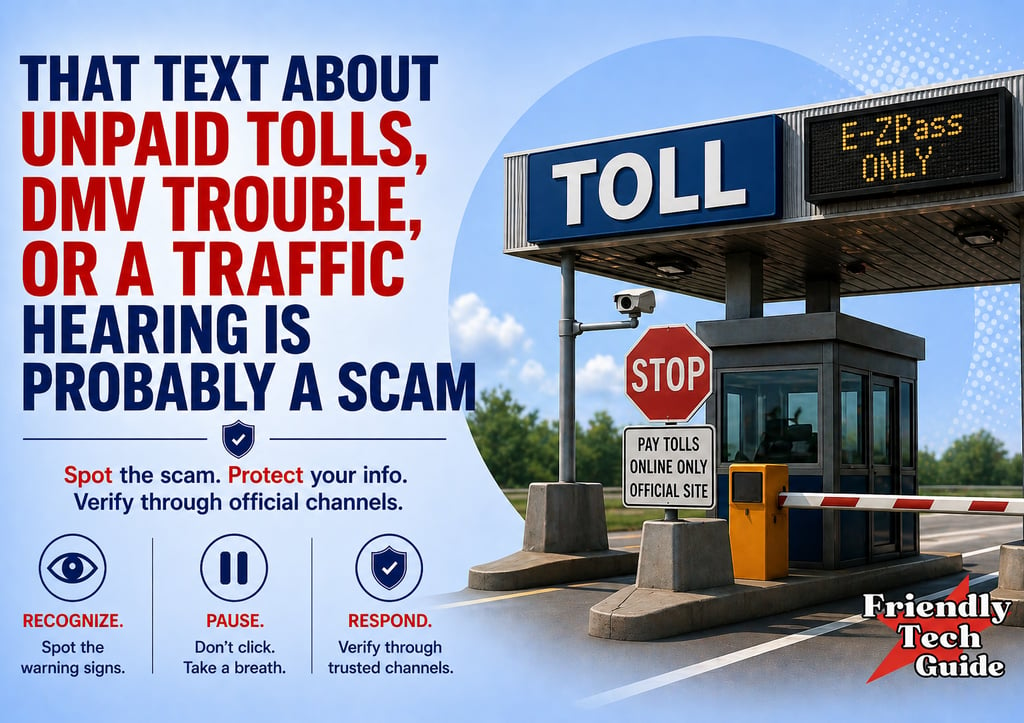
If you get a text saying you owe unpaid tolls, have DMV trouble, or need to pay before a traffic hearing, do not tap the link.
That message may look official. It may mention late fees, license suspension, vehicle registration trouble, a court date, a fake case number, or a final warning. It may include a payment link or a QR code. It may even use language that sounds like it came from a toll agency, the DMV, or a court system.
That does not make it real.
Scammers use messages like this because they know the subject feels serious. Most drivers do not want trouble with tolls, tickets, registration, license status, or court notices. A message that threatens fees or enforcement can make a person act quickly.
That pressure is the trap.
The safer move is to use the three-step RPR method:
Recognize the warning signs.
Pause and verify before you click, pay, reply, or scan.
Respond with the correct action once you know what is real.
This method keeps the process simple. You do not need to solve the whole problem in the first few seconds. You only need to stop the scammer from controlling your next move.
Why these messages feel believable
These scams work because the topic sounds normal.
Tolls are real. Traffic tickets are real. DMV notices are real. Court dates can be real.
Scammers hide inside that everyday fear.
A fake message may say:
You owe an unpaid toll.
A late fee will be added if you do not pay right away.
Your license could be suspended.
Your vehicle registration could be suspended.
You missed a traffic hearing.
You can avoid court by paying now.
You must scan a QR code to settle the balance.
You must click a link before enforcement begins.
The message may use official-sounding words like final notice, violation database, administrative fee, enforcement action, or hearing notice.
Those words are meant to make you panic.
When you feel rushed, you are more likely to click. That is exactly what the scammer wants.
Step 1: Recognize
The first step is to Recognize the warning signs.
The warning sign is not only the subject of the message. It is the way the message tries to control your behavior.
Be especially careful if the text:
Arrives unexpectedly.
Demands immediate payment.
Threatens license suspension, registration suspension, court trouble, added fees, or enforcement action.
Includes a payment link.
Includes a QR code.
Uses a strange web address.
Asks for personal information.
Asks for a credit card, bank account, Social Security number, or driver's license number.
Claims to be from a government agency, but comes from a random phone number.
A scam text does not need to look sloppy. Many scam messages now look clean, official, and believable.
That is why the safest rule is not to click if it looks real.
The safest rule is pause and verify before you act.
Step 2: Pause and Verify
The second step is Pause and Verify.
This is the most important part of the process.
Pause means you stop the momentum.
You do not click the link. You do not scan the QR code. You do not reply. You do not call the phone number listed in the message. You do not enter payment information just because the message sounds urgent.
Verify means you check the issue through a source you choose yourself, not through the message.
That means using:
The official website you type in yourself.
The official app you already trust.
A phone number from the official website.
A bill, statement, or account portal you already know is real.
Do not use the link in the text as your starting point.
For an unpaid toll text, go directly to the official toll agency website by typing the address yourself or using a bookmark you already trust. If you have a toll account, log in through the official site and check there.
If you are not sure which agency controls the toll, search for the agency through a normal browser search, but be careful with sponsored results. Look for official state or agency websites.
If you still have questions, call the toll agency using a number from its official website, not from the text message.
The FBI Internet Crime Complaint Center has warned about smishing texts claiming people owe money for road toll services. It recommends checking your account through the legitimate toll service website, contacting the toll service directly, deleting the smishing text, and securing your accounts if you clicked or shared information.
If the text says it is from the DMV
A DMV text scam may claim that you have an overdue traffic ticket, a vehicle record problem, a license suspension threat, or a registration issue.
The Federal Trade Commission has warned that scammers pretend to be DMV offices and claim people must pay overdue traffic tickets immediately. These messages may threaten to suspend a license, suspend a vehicle registration, add extra fees, or take other serious action.
In Florida, the Florida Department of Highway Safety and Motor Vehicles warns consumers to watch for scams that try to collect personal information or payment by pretending to be official motor vehicle communications.
Use Pause and Verify here too:
Do not click.
Do not share personal information.
Do not enter payment information.
Go directly to the official state motor vehicle website.
Use only a known official phone number or website if you need to check the issue.
For Florida drivers, that means using official FLHSMV resources and not the information inside a suspicious text.
If the text mentions a traffic hearing
Another version of this scam may include what looks like an official traffic hearing notice. It may include a QR code, a fake case number, a fake hearing date, or a warning that you can avoid court by paying now.
That setup is meant to feel serious and immediate.
Do not scan the QR code. Do not click the link. Do not pay through text.
If you think the notice could be real, use Pause and Verify.
Check directly with the court using a website or phone number you know is correct. Do not use the contact information inside the message.
A safe verification step should take you away from the suspicious text, not deeper into it.
Step 3: Respond
The third step is Respond.
Responding does not mean reacting emotionally. It means taking the correct next action after you have paused and verified safely.
If the message is fake, report it and delete it.
You can report unwanted scam texts in several practical ways:
Use your phone’s report junk or report spam option.
Forward the message to 7726, which spells SPAM.
Report the scam to the Federal Trade Commission at ReportFraud.ftc.gov.
If the message involves road toll smishing, file a complaint with the FBI Internet Crime Complaint Center at IC3.gov and include the phone number that sent the message and the website listed in the text.
After you report it, delete the message.
Do not keep reopening it. Do not keep checking the link. Do not argue with the sender. Do not try to prove the scammer wrong.
Your job is to protect yourself, not to continue the conversation.
What if you already clicked?
Clicking does not automatically mean everything is lost. What matters now is what happened next.
If you only clicked but did not enter information, close the page. Do not go back to it. Watch your accounts and consider running a security scan on your device if anything is downloaded or looks suspicious.
If you entered payment information, contact your bank, credit card company, or payment app immediately using the official number on the back of your card or inside the official app. Tell them you may have entered information on a scam site.
If you entered personal information such as your driver's license number, Social Security number, date of birth, or address, take it seriously. Consider identity protection steps such as monitoring your credit, placing a fraud alert, or freezing your credit if the information exposed was sensitive.
If you entered a password, change it immediately from a clean device. If you reused that same password anywhere else, change it there too. Turn on multi-factor authentication where available.
Then use RPR again:
Recognize what happened.
Pause and verify what information was exposed.
Respond with the right protective steps.
The RPR habit
The RPR method is designed to be simple enough to remember in a stressful moment.
Recognize means you notice the pressure, the threat, the link, the QR code, or the request for personal information.
Pause and verify means you stop before acting and check through an official source you choose yourself.
Respond means you report, delete, secure your accounts, contact your bank, or take the next correct step based on what happened.
This habit protects you from more than toll and DMV scams. It also works for fake package delivery texts, fake bank fraud alerts, fake account warnings, fake cloud storage warnings, and fake government notices.
The scammer wants the text message to become your starting point.
Do not let it.
Your starting point should be the official website, the official app, or a phone number you already know is real.
The simple rule
If a text about tolls, DMV trouble, a traffic ticket, or a traffic hearing makes you feel rushed, suspicious, or afraid, stop.
Do not tap the link.
Do not scan the QR code.
Do not pay from the message.
Pause and verify first.
A scary text is not proof. A link is not proof. Pause and verify before you act.
That one pause can protect your money, your identity, and your peace of mind.
Read next
If You Clicked the Link, Here Is What to Do Next
How to Verify Any Call or Text Without the Risk
The Second Lock: Why Multi-Factor Authentication Is Your Final Line of Defense
CTA
If you found this information helpful, please forward it to someone who could benefit.
Disclaimer
Friendly Tech Guide provides general education and support. We are not a law firm, bank, or government agency. For legal or financial advice, contact a qualified professional. If you believe you are in immediate danger, call local law enforcement.
Sources
Federal Trade Commission
FBI Internet Crime Complaint Center
Florida Department of Highway Safety and Motor Vehicles
Federal Trade Commission
Federal Trade Commission
Personalized technical assistance at your convenience.
© 2025. All rights reserved.